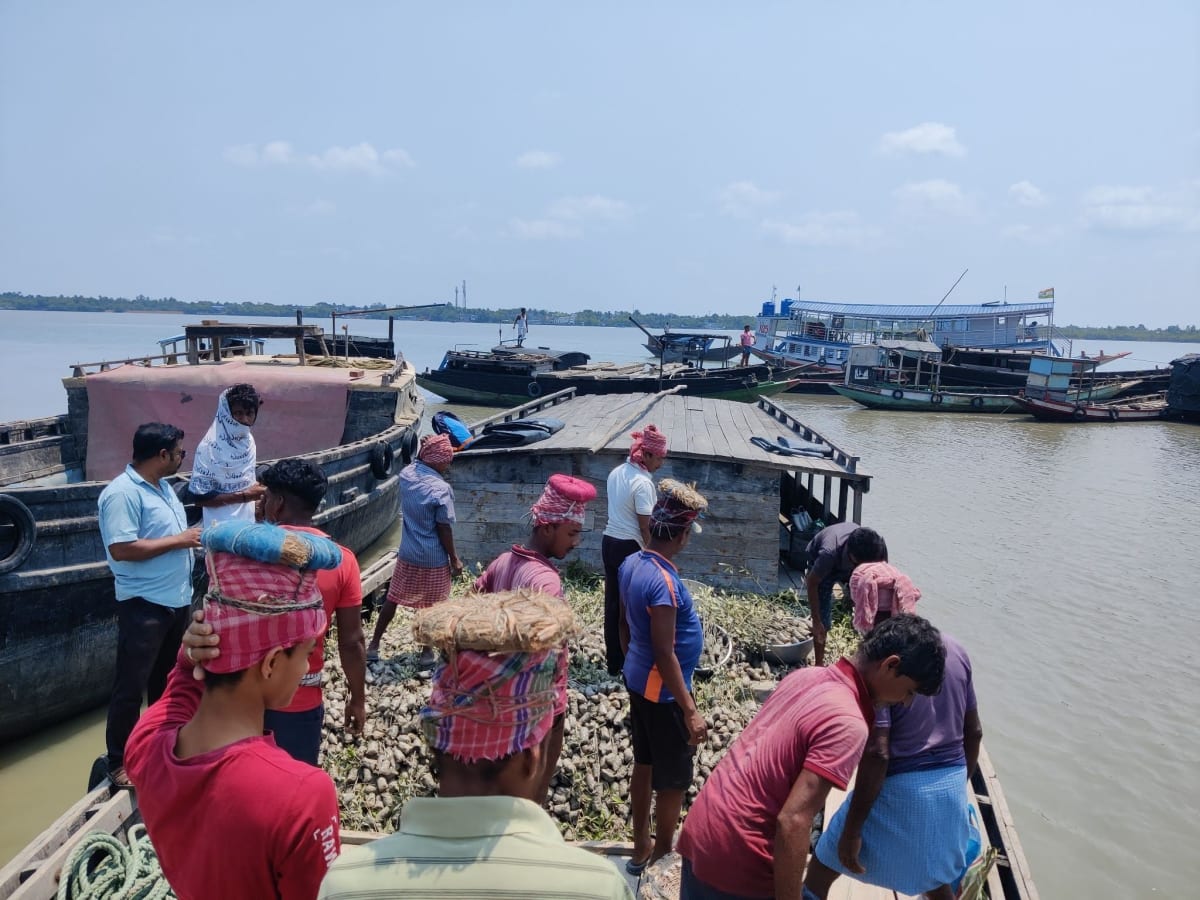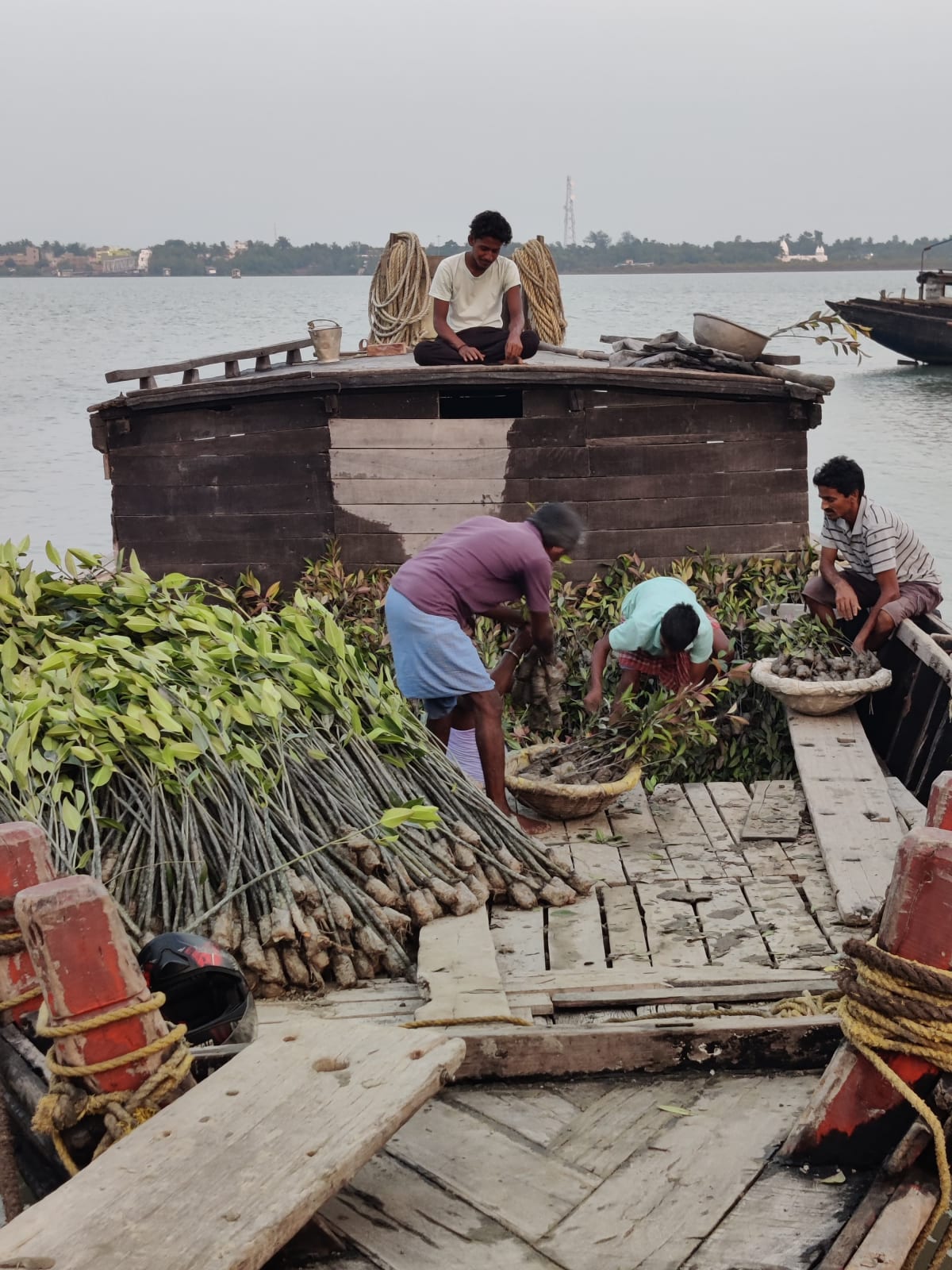
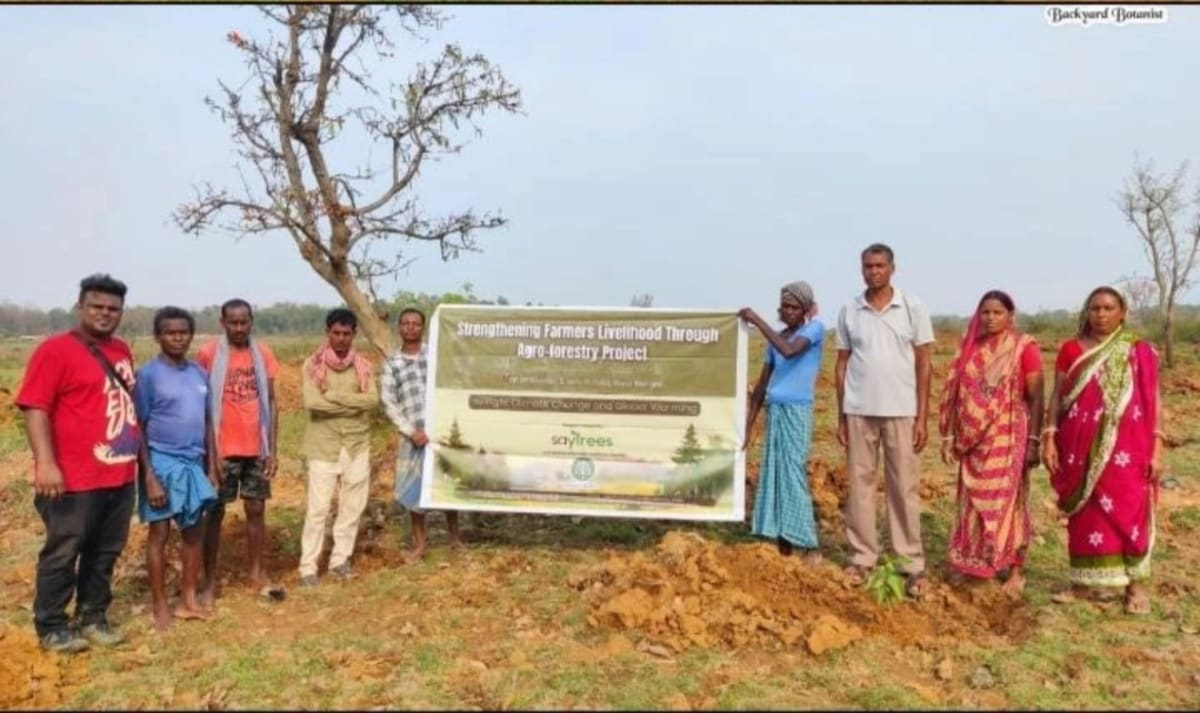
Over the past few weeks, we have been implementing an agroforestry project in West Bengal with SayTrees across Sahebkhali, Fullaipur, and Purulia.
The project covers 5,000 saplings across 100+ farmer landholdings, but the most important part of the work is not the number. It is how each farm is being planned.
Most farmers involved in this project manage small landholdings. That means every planting decision has to fit into what already exists. Trees cannot interfere with current crops, reduce usable farm space unnecessarily, or create a maintenance burden without long term value.
That is why this project is being planned as a farmer led agroforestry initiative, where tree placement, species selection, and planting models are adapted to each farm's reality.
Why this is not a standard plantation drive
A plantation drive is usually measured by how many saplings are planted.
Agroforestry has to be measured differently because trees are being introduced into working farms where people are already growing crops, managing seasonal income, and making daily land use decisions.
For small farmers, even a small change in land use matters.
If a tree is placed badly, it can compete with crops, create unwanted shade, block movement, or become difficult to maintain. If a species has no practical or ecological value for that farmer, it is less likely to be protected over time.
That is why this project is being designed around long term usability, not just plantation numbers.
Before planting, the focus is on asking practical questions:
- Where can trees grow without disturbing existing crops?
- Which species will be useful to the farmer in the long run?
- Can this farm support boundary plantation, orchard patches, or intercropping?
- What will be easier for the farmer to maintain?
- How can the project support both income and ecological resilience?
These questions decide whether a sapling becomes part of a farming system or remains only a plantation record.
How the project is being planned farm by farm
One of the most important parts of this agroforestry project is farm level planning.
Across Sahebkhali, Fullaipur, and Purulia, each farm has a different layout, landholding size, crop pattern, and planting possibility. A single model cannot be applied everywhere.
Some farmers have boundary space where trees can be planted without affecting the main crop area. Some have small pockets of land that can support orchard style planting. Some farms may allow selective intercropping, but only if the spacing and species are suitable.
This is why every farm is being assessed individually.
Farm level planning helps ensure that the project is practical for farmers and better suited for long term survival. It also helps avoid one of the biggest problems in tree based farming projects: planting first and thinking about usability later.
In this project, the land is understood first. The planting model comes after.
The plantation models being used
The project uses three main agroforestry models depending on land availability, farmer preference, and site suitability.
Boundary plantations
Boundary plantations are being used where trees can be planted along the edges of farmland.
This model is especially useful for small landholdings because it allows farmers to retain their main crop area while still integrating trees into the farm. Over time, boundary trees can support shade, biomass, biodiversity, and long term farm value without disrupting cultivation.
Small orchard patches
Where land allows, fruit bearing trees are being planted in small orchard patches.
These patches are designed with long term farmer income in mind. Fruit trees take time to mature, but once established, they can diversify farm output and create additional seasonal value for farmers.
This model works best when there is enough space and the farmer is able to maintain the trees over time.
Selective intercropping
Selective intercropping is being considered only where it is suitable.
The goal is not to force trees into every available space. The goal is to place them where they can grow without creating unnecessary competition with existing crops.
This is important because agroforestry should strengthen the farming system, not make it harder to manage.
The species mix and why it matters
The species mix has been selected to balance farmer income, ecological value, and climate resilience.
A strong agroforestry project cannot depend only on fast growing trees or generic plantation species. The species need to make sense for the land, the farmer, and the long term purpose of the project.
Fruit trees for farmer income
The project includes fruit bearing species such as mango, guava, lemon, jackfruit, amla, custard apple, and ber.
These trees are being planted with long term income potential in mind. Once mature, they can provide seasonal produce, diversify farm output, and reduce dependence on a single crop cycle.
For small farmers, this matters because trees are more likely to be protected when they create future value.
Native and multipurpose trees for resilience
The project also includes native and multipurpose species such as mahua, palash, sal, bahera, and haritaki.
These species support biodiversity, soil health, and long term landscape resilience. They also bring ecological and practical value in rural contexts, making them more suitable than species chosen only for quick plantation numbers.
Together, the fruit trees and native multipurpose species are helping shape an agroforestry system that supports both livelihoods and ecological restoration.
What this means for farmers and the landscape
The purpose of this project is not only to increase tree cover. It is to support farming systems that are more diverse, more resilient, and more useful over time.
For farmers, the project can support long term income through fruit bearing trees, better land value, and diversified farm output. For the landscape, it can contribute to improved soil health, more biodiversity, better microclimates, and carbon sequestration through tree based farming systems.
This is where agroforestry becomes especially relevant for CSR and ESG initiatives because it connects environmental restoration with farmer livelihoods.
What corporates can learn from this project
For corporates considering a CSR agroforestry project or a nature based climate action initiative, this project offers a simple lesson: the quality of planning matters as much as the scale of planting.
Before funding an agroforestry project, organisations should ask:
Is the project planned farm by farm?
Agroforestry works best when it reflects actual land conditions, not only project targets.
Are the species locally suitable?
Species should be selected based on soil, climate, farmer needs, ecological value, and long term maintenance.
Are farmers involved in placement decisions?
Farmer participation is essential because they are the ones who will live with and maintain the trees.
Is there a maintenance and survival plan?
Planting is only the beginning. Survival, growth, and replacement planning should be part of the project design.
Will the project report beyond sapling count?
A strong project should track survival, growth, farmer adoption, and ecological outcomes over time.
These questions help separate a serious agroforestry intervention from a one time plantation activity.
Why the real impact will take time
This project is still in its early stage.
The saplings have been planned and planted with care, but the real impact will appear over time.
It will show in how many trees survive, how well they grow, how farmers use them, how the soil responds, and how the farming system changes over the years.
Agroforestry is not a one day result. It is a long term relationship between trees, crops, farmers, and the land.
A meaningful start in West Bengal
Across Sahebkhali, Fullaipur, and Purulia, this agroforestry project with SayTrees is being shaped around the realities of 100+ farmer landholdings.
The scale is important: 5,000 saplings.
But the method matters more.
Each farm is being planned individually. The planting models are being adapted to land availability. The species mix is being chosen for both farmer income and ecological resilience.
For companies looking to invest in agroforestry in West Bengal, farmer led climate action, or CSR projects in rural India, this is the distinction that matters.
The real measure of agroforestry is not how many saplings are planted.
It is whether those trees survive, support farmers, improve the land, and become part of the farming system.