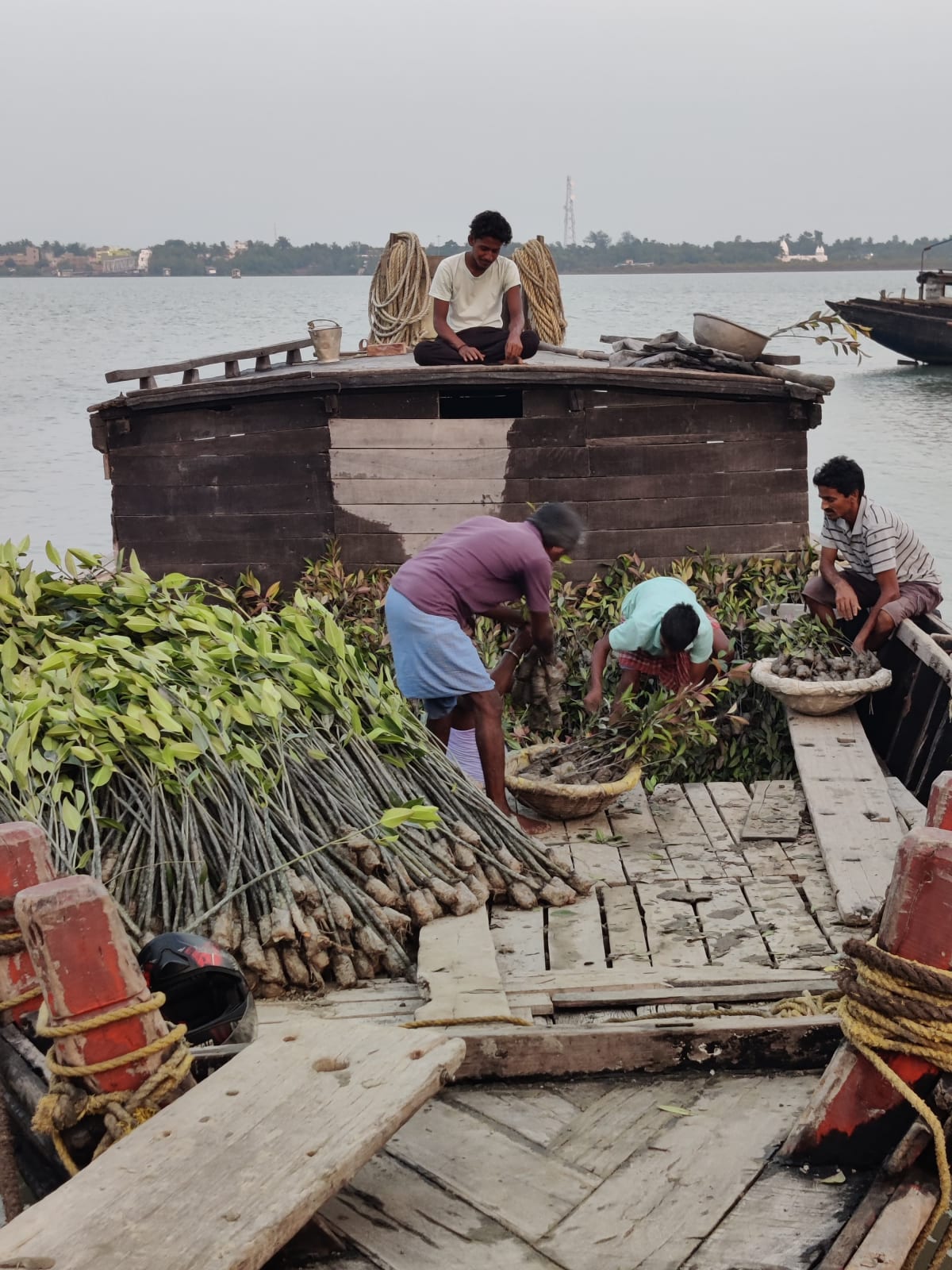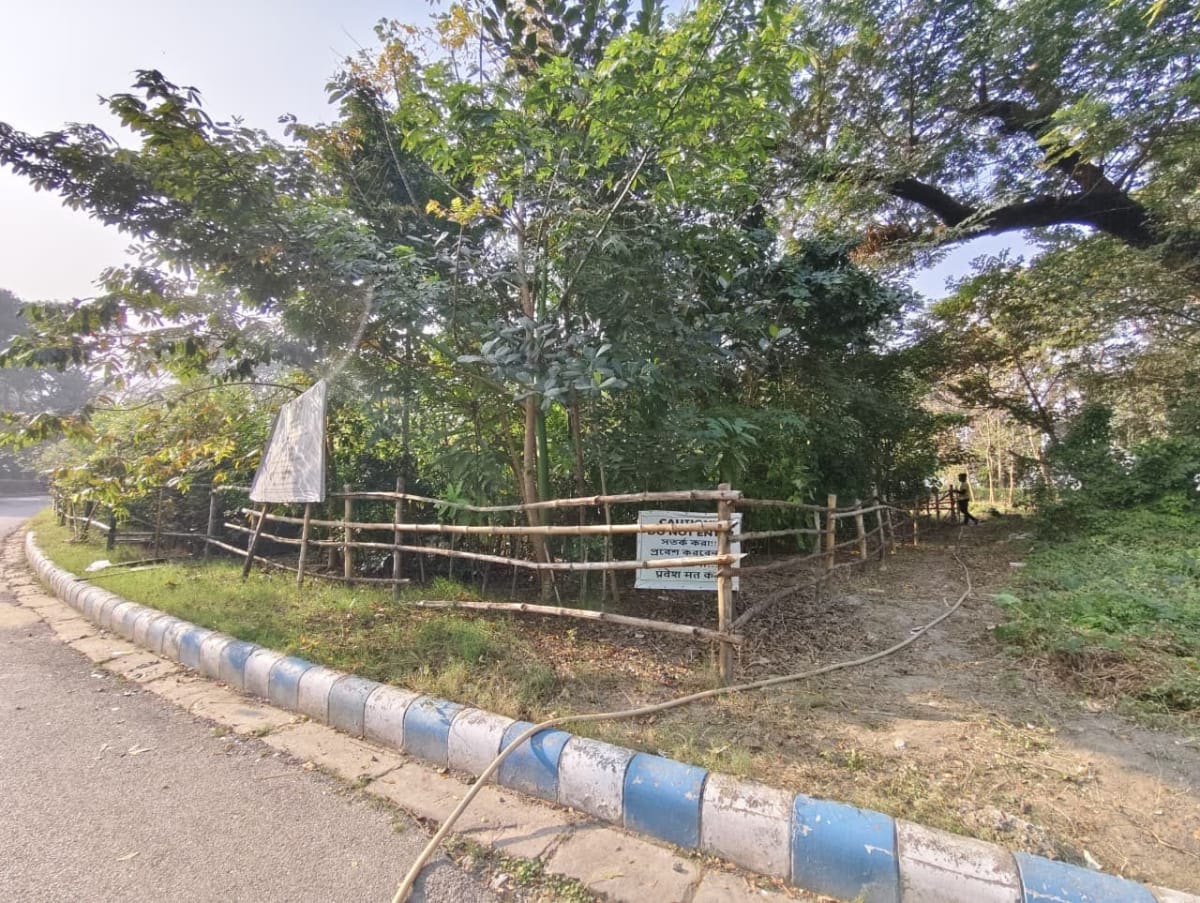
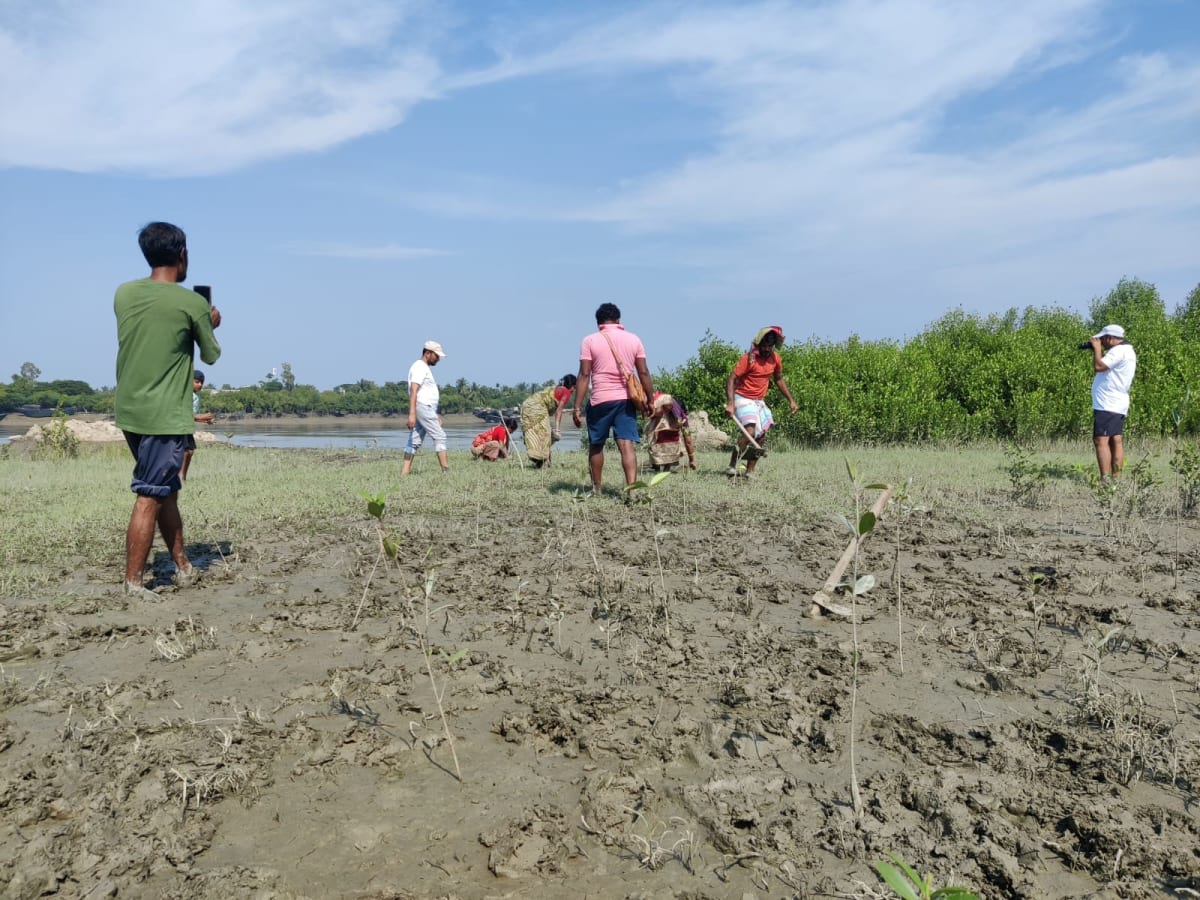
The Sundarbans is the world's largest single tract of mangrove forest, the only mangrove ecosystem on the planet inhabited by tigers, and the front line of climate change in South Asia. It is also losing roughly 2 to 3 km² of mangrove cover every year — to erosion, embankment failure, salinity shifts, and unsustainable use.
This is the ecosystem most Indian corporates ask us about, and it deserves a clear-eyed conversation.
Why mangroves outperform almost every other nature-based climate solution
Mangroves are unique because they sit at the intersection of three priorities most ESG frameworks treat separately:
- Climate mitigation. A hectare of healthy Sundarbans mangrove sequesters 6 to 11 tonnes of CO₂-equivalent per year, with the majority stored as soil carbon in waterlogged sediments where it can remain stable for centuries. Terrestrial tropical forest, by comparison, sits closer to 2–4 tonnes per hectare per year.
- Climate adaptation. A 100-metre belt of mature mangrove can attenuate 60–70% of incoming wave energy, which directly translates into lives, homes, and farmland saved during cyclones like Amphan (2020) and Yaas (2021).
- Biodiversity and livelihoods. Mangrove root systems are nurseries for fish and crustaceans that support roughly 4.5 million people in the Sundarbans alone. Restoring mangroves restores fisheries.
For a company allocating CSR or climate budget, this convergence is rare. Few interventions hit mitigation, adaptation, biodiversity, and livelihoods simultaneously — mangroves do.
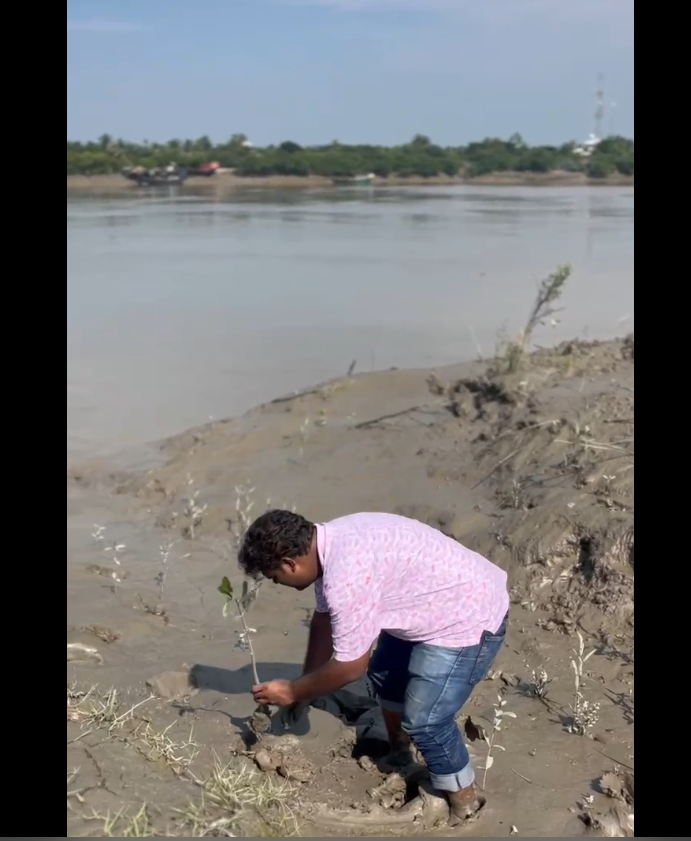
What a real Sundarbans restoration project looks like
A serious mangrove restoration cycle in the Sundarbans is a 5-year operation, not an event. Here's what the work actually involves:
Year 0: Site assessment and design
Before a single sapling goes in the ground, the team should produce:
- Tidal zonation mapping — identifying which species belong in which tidal range (low intertidal, mid intertidal, high intertidal).
- Hydrology assessment — confirming that the site actually floods with the tide, and identifying where embankment or canal corrections are needed.
- Community consultation — multiple village-level meetings to confirm consent, agree on wage structures, and identify the local committee that will steward the site.
- Species plan — a written list of native species (typically Avicennia marina, Avicennia officinalis, Sonneratia apetala, Rhizophora mucronata, Bruguiera gymnorrhiza, Heritiera fomes, Excoecaria agallocha) matched to specific tidal zones.
Year 1: Nursery and planting
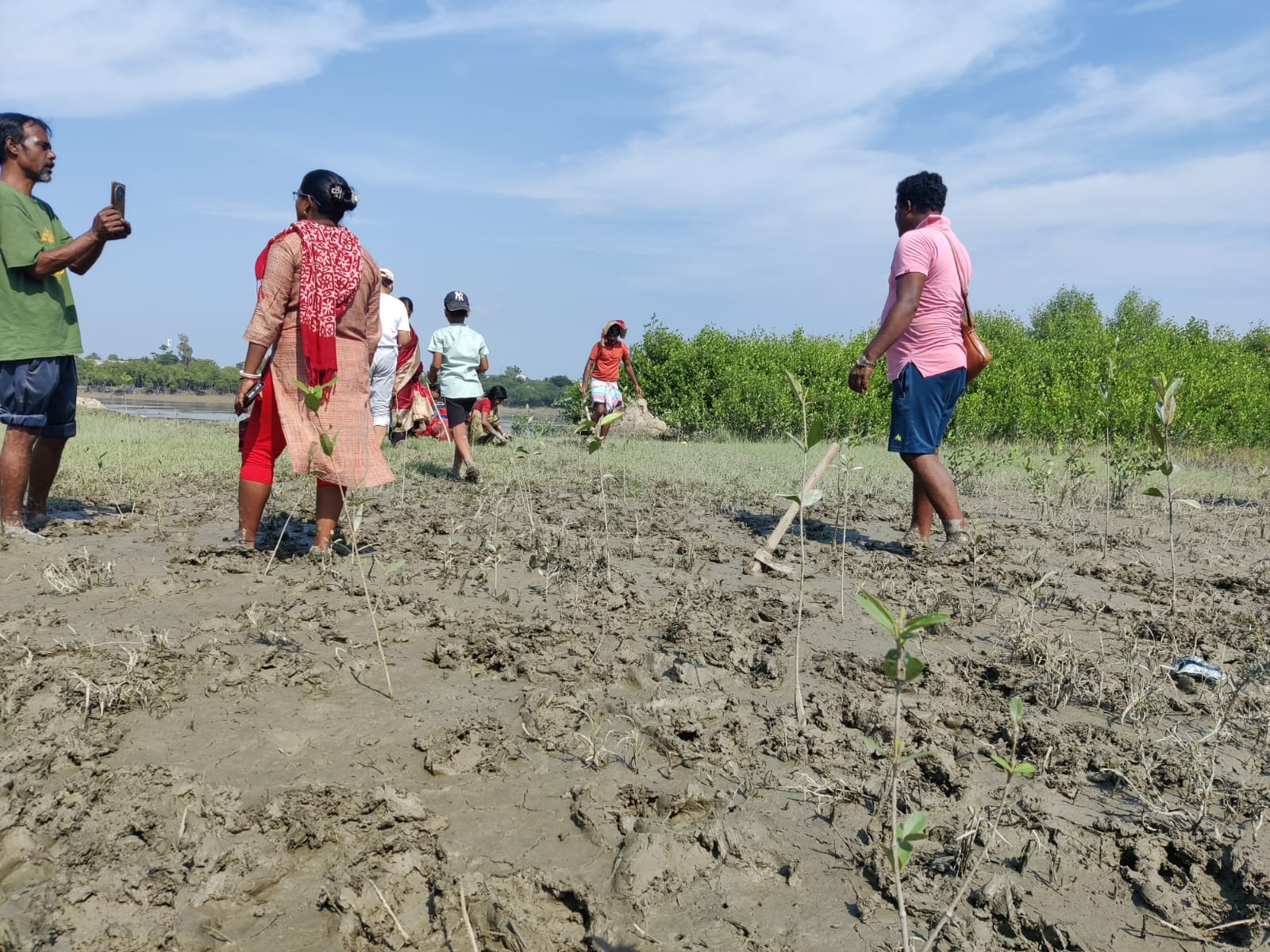
Most species in the Sundarbans cannot be planted from direct seed in the field. They are raised in community nurseries for 6–12 months, then transplanted at the start of the post-monsoon planting window (October–November is typical). Direct propagule planting works for Rhizophora and Bruguiera, but only in the right tidal zone.
Planting density varies by species and tidal range, generally 2,500 to 5,000 propagules per hectare.
Years 2–5: Maintenance, monitoring, and reporting
This is where projects succeed or fail. The work in this period includes:
- Quarterly survival counts on permanent monitoring plots
- Annual canopy cover and species diversity surveys
- Replanting in zones with mortality above 20%
- Community wage payments tied to monitoring outcomes (not planting events)
- Annual third-party verification, ideally with drone-based mapping
A project that ends after year 1 is not a restoration project. It is a planting event with a press release.
The three failure modes that quietly kill most mangrove projects
Across India, the long-term survival rate for mangrove plantation projects is uncomfortably low — public estimates from peer-reviewed studies put it between 10% and 50% depending on geography. The pattern is consistent.
Failure mode 1: Wrong species, wrong zone
Rhizophora is the photogenic mangrove with the stilt roots — it is also the most over-planted species in India because it makes good visuals. Rhizophora belongs in the low intertidal zone with regular tidal flushing. Plant it in the high intertidal where the soil dries out between tides, and it dies. Plant Avicennia in waterlogged low-intertidal mud, and it suffocates. Species-zone matching is non-negotiable.
Failure mode 2: Hydrology was never fixed
Many degraded sites in the Sundarbans were degraded because the tidal flow was disrupted — by an embankment, a closed sluice gate, a silted-up creek. If you plant mangroves on land that no longer receives the tide, you have planted a terrestrial garden that will die when the dry season arrives. Hydrology correction is often the single most important and most expensive intervention.
Failure mode 3: No community ownership
The Sundarbans is inhabited. Mangrove sites that are not protected by the surrounding community will be grazed, cut for fuelwood, or converted for aquaculture. A restoration plan that does not budget for community wages, fence material, and a written agreement with the local panchayat or village committee is a plan that will not survive contact with the dry season.
How to evaluate a mangrove restoration proposal
If a vendor or NGO has sent you a Sundarbans restoration proposal, here are the eight things to look for:
- A site map with GPS polygons, not a vague district name.
- A species-zone matrix showing which species go in which tidal range.
- A hydrology section — even one paragraph confirming the site is currently flooded by the tide is better than silence.
- A 5-year budget, not a 1-year planting budget.
- A community engagement plan with named villages, named committees, and named wage rates.
- Defined survival targets — "≥75% at year 3" is reasonable; "high survival" is not.
- A monitoring methodology that names the survey design (transects, permanent plots) and the frequency.
- A reporting cadence — quarterly photo-monitoring at minimum, annual narrative reports.
If most of these are missing, the proposal is for a planting drive, not a restoration project. They are not the same thing.
Where mangroves fit in a corporate climate strategy
Mangrove restoration is not the right answer to every climate question. It is the right answer when:
- You want a multi-decadal asset that compounds in value as the trees mature.
- You can commit a 5-year budget, not a 1-year line item.
- You want measurable outcomes: hectares restored, tonnes of CO₂-equivalent sequestered, families with new income, kilometres of coastline protected.
- You're comfortable with field-based delivery, including the operational complexity of working in remote, tidally-flooded landscapes.
Done well, the per-rupee impact is genuinely hard to beat. Done poorly, it's an expensive way to plant a garden underwater.
If you're considering a mangrove project in the Sundarbans or elsewhere along India's eastern coast and want to talk through what would and wouldn't work for your context, get in touch. We'll give you a straight answer.