Environmental CSR works best when the project fits the landscape. A dense native forest on an urban campus, a mangrove restoration programme on a tidal coastline and an agroforestry project on working farms can all create value - but they solve very different problems.
That distinction matters for companies planning CSR plantation projects in India. The strongest programme is not the one with the largest sapling count. It is the one that connects the corporate objective with the right site, the right restoration model, a realistic maintenance plan and evidence that can be monitored over time.
Backyard Botanist works across all three models - native and Miyawaki forests, mangrove restoration and agroforestry - and supports projects from site planning through implementation, maintenance and monitoring. For corporate partners, this means the brief can start with the objective. We can help structure the landscape solution around it.
The simplest way to think about it
Miyawaki is typically strongest for compact urban and institutional sites. Mangrove restoration is designed for coastal and tidal ecosystems. Agroforestry works inside productive rural landscapes where ecological outcomes and farmer livelihoods need to coexist.
Environmental CSR starts with the landscape, not the format
Schedule VII of the Companies Act recognises environmental sustainability, ecological balance, protection of flora and fauna, agroforestry, conservation of natural resources and the quality of soil, air and water as eligible CSR areas. That creates room for companies to design programmes around real ecological needs rather than treating tree plantation as a single standard product.
For a CSR Head or sustainability team, the practical decision is therefore about fit. Urban land, degraded coastlines and farmer-owned agricultural landscapes have different ecological conditions, stakeholders and maintenance requirements. A credible implementation partner should be able to explain why a model belongs on a particular site before discussing how many saplings will be planted.
| CSR objective | Strong potential fit | What the project should prioritise |
|---|---|---|
| Urban biodiversity and green cover | Miyawaki / native forest | Native species, soil preparation, establishment, maintenance and canopy development |
| Coastal resilience and mangrove recovery | Mangrove restoration | Hydrology, tidal suitability, native mangrove species, local stewardship and spatial monitoring |
| Farmer livelihoods and rural resilience | Agroforestry | Farm-level planning, crop compatibility, useful species, farmer participation and long-term usability |
| Multi-site restoration with stronger reporting | Any of the above + MRV | Site records, GIS/location data, survival, field evidence and multi-year monitoring |
Related reading: Plantation vs restoration: what environmental CSR projects should prioritise
Miyawaki forests: a strong fit for compact urban sites
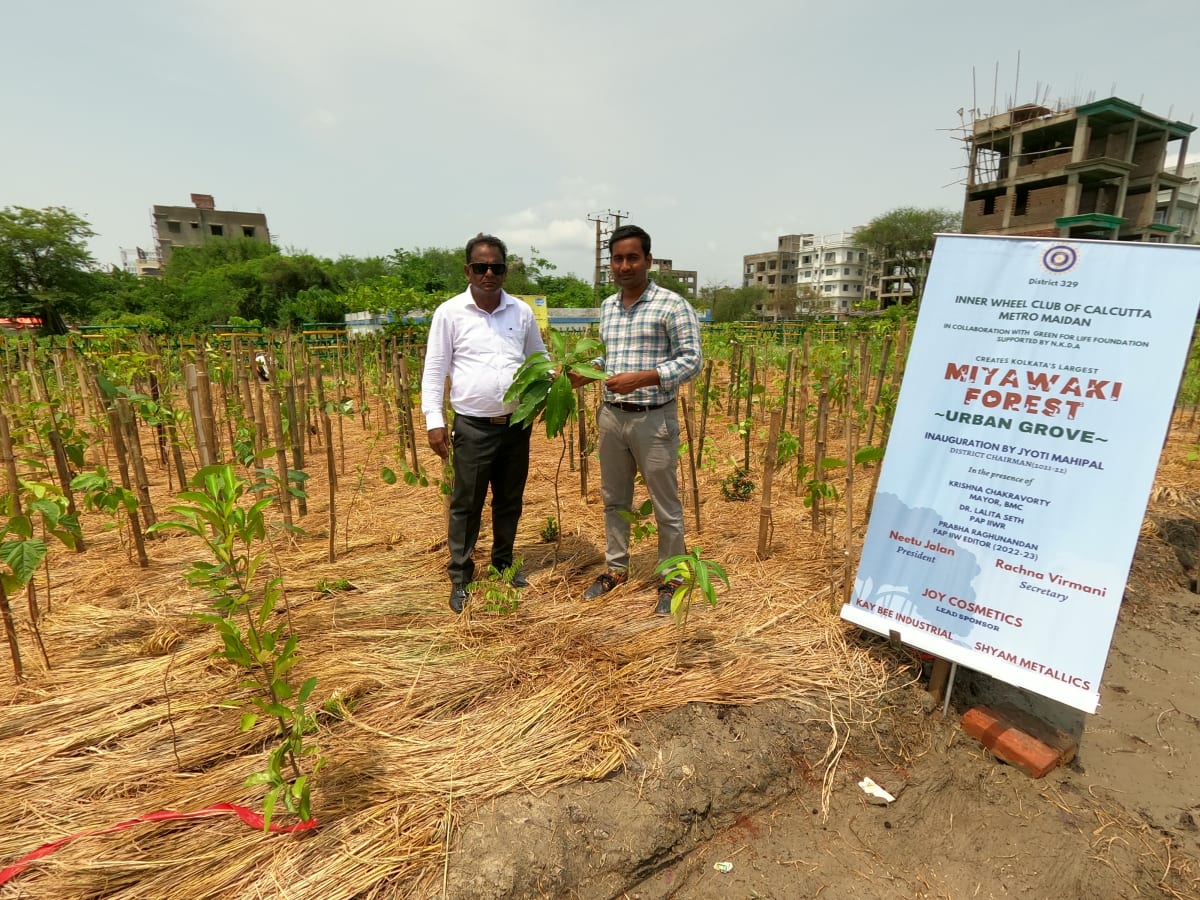
Miyawaki forests are useful when a company has a compact urban, industrial or institutional site and wants to build dense native vegetation. The method is soil-first and relies on a diverse mix of locally appropriate native species planted relatively densely.
For CSR projects, the value is usually strongest around urban biodiversity, green cover, microclimate improvement and visible long-term ecological transformation. The method is less suitable when the real objective is landscape-scale rural restoration or a large carbon programme.
Backyard Botanist has developed Miyawaki and native forest projects with corporate partners and works with native species selection, soil preparation, execution, maintenance and monitoring. The important point is that the project is designed as a forest-establishment programme, not as a one-day plantation event.
Related reading: Miyawaki Forests in India: A Practical Guide for Corporate CSR Teams
Mangrove restoration: built for coastal resilience
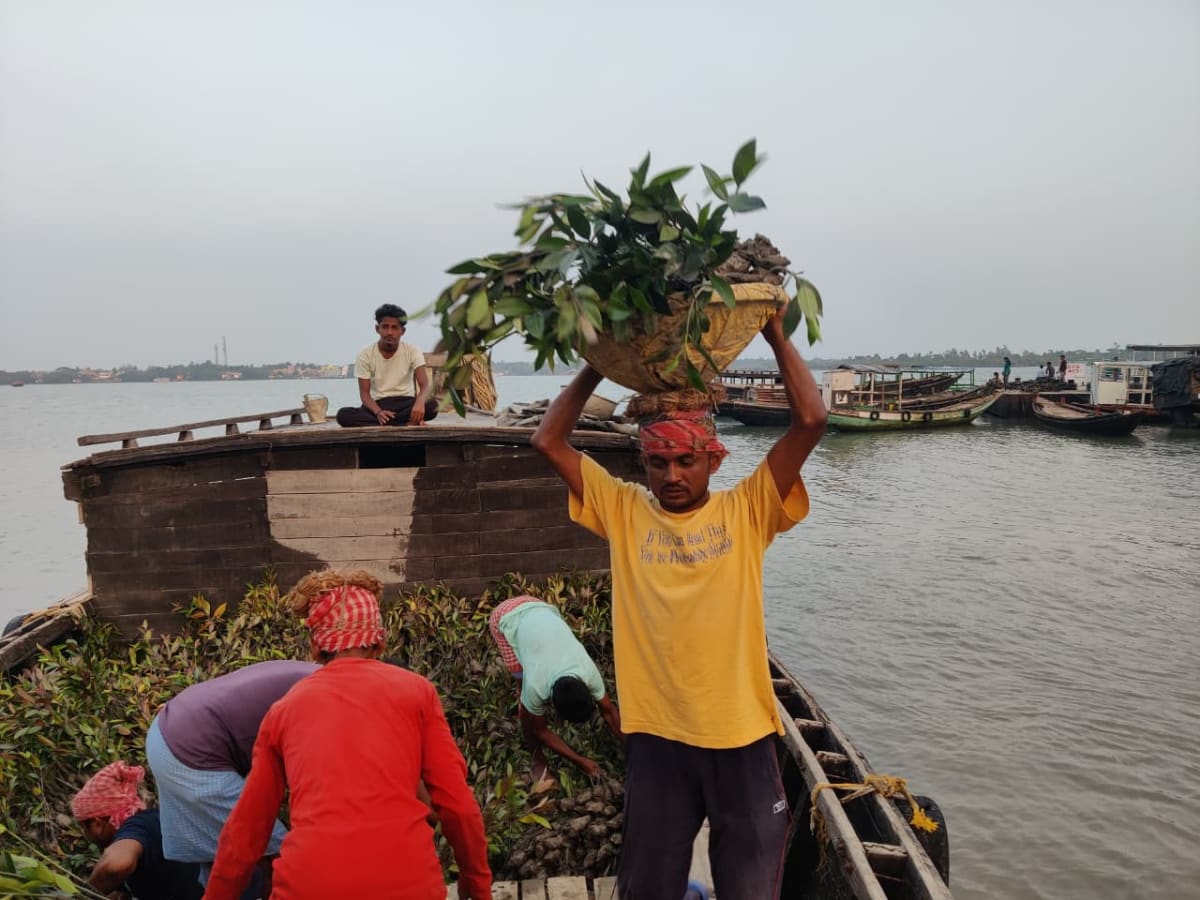
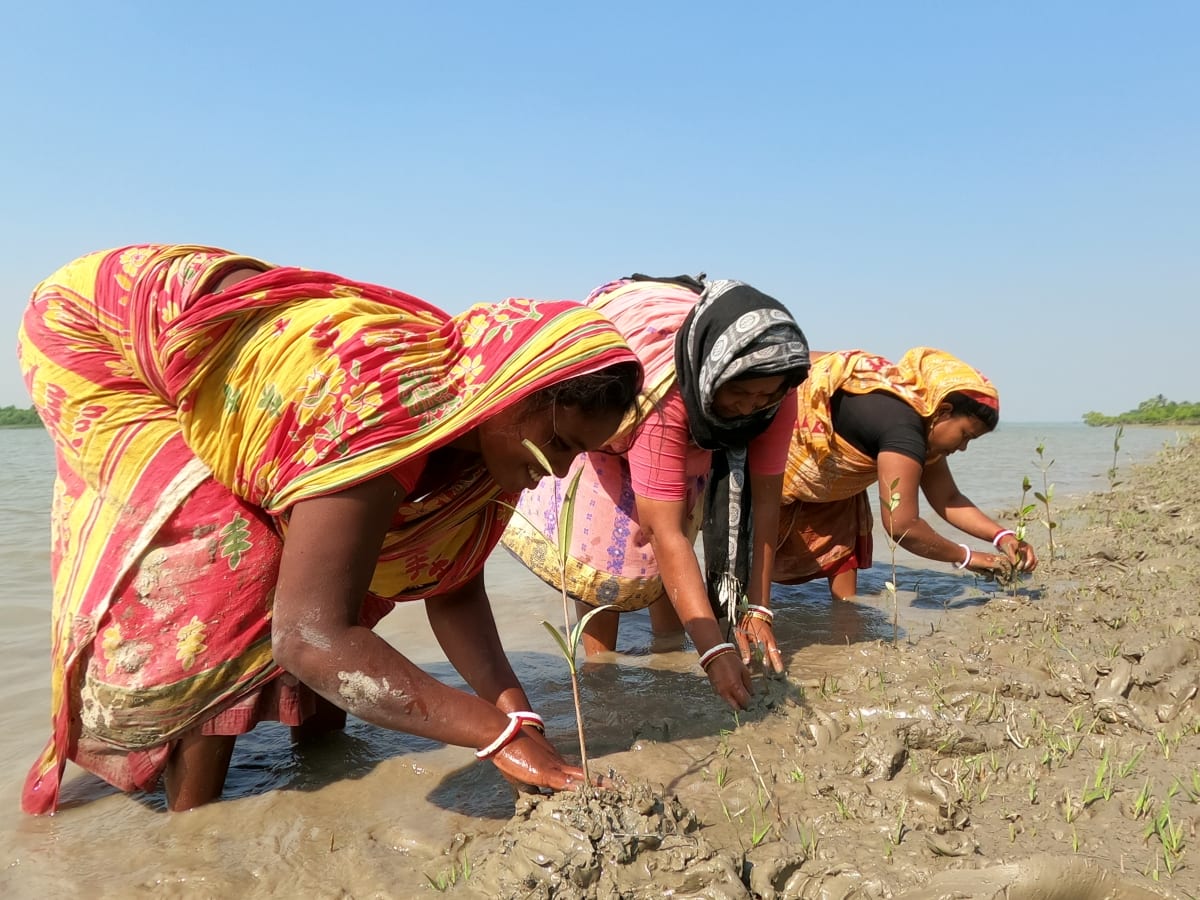
Mangrove restoration operates in a completely different environment. Tides, salinity, hydrology, site elevation and native species determine whether a coastal intervention has a realistic chance of establishing.
For CSR teams focused on coastal resilience, biodiversity, shoreline ecosystems and long-term climate adaptation, mangrove restoration can be a strong fit. It also requires patience. The project needs restoration-focused execution, not simply saplings placed near water.
Backyard Botanist's public project portfolio reports more than 10 million mangrove saplings across coastal restoration work. The team also supplies native Sundarbans mangrove species and supports project execution and monitoring. This gives corporate partners a route into coastal restoration without having to assemble separate site, nursery, implementation and monitoring vendors.
Agroforestry: where ecological outcomes meet farmer livelihoods
Agroforestry integrates trees into working farms. That makes it relevant for companies whose CSR objectives include farmer livelihoods, rural resilience, soil health, biodiversity and climate-resilient agriculture.
The design has to work farm by farm. A tree that blocks an existing crop, creates excessive shade or offers little long-term value to the farmer is unlikely to become a successful part of the landscape.
Backyard Botanist is implementing an agroforestry programme in West Bengal with SayTrees involving 5,000 saplings across more than 100 farmer landholdings. Each farm is planned according to available space, current crops and long-term usability. That project demonstrates the difference between a standard plantation count and a farmer-led landscape programme.
Project example: Agroforestry in West Bengal with SayTrees
The right model becomes stronger when the outcomes are measurable
The three models should not be measured with exactly the same KPI set. A Miyawaki site may focus on establishment, survival, native-species composition and canopy development. A mangrove project may need site condition, tidal suitability, vegetation recovery and spatial monitoring. An agroforestry programme may combine tree survival with farmer participation, land-use compatibility and livelihood-related outcomes.
For larger or distributed programmes, Backyard Botanist can also use digital monitoring and location-linked field data through its dMRV approach. The technology is useful because it makes project evidence easier to trace across time and sites. It supports field monitoring; it does not replace field ecology.
This is important for corporate partners because a CSR report becomes stronger when it can show where the project is, what was implemented, how the site is being maintained and what changed over time.
How we monitor: How Backyard Botanist verifies restoration sites with AI-based dMRV
If your company has the CSR objective, Backyard Botanist can help build the project around it
A common barrier for corporate teams is not intent. It is execution. The company may have an environmental CSR mandate or an approved budget, but not the right land, local site network, ecological design, nursery supply, field team, maintenance structure or monitoring system.
That is where Backyard Botanist is designed to collaborate. We can help match a partner with suitable available project land and landscapes, shape the intervention around the CSR objective, execute the project on the ground and stay involved through maintenance and monitoring. Site availability and final design remain subject to ecological suitability and project scope.
| Stage | Backyard Botanist collaboration model |
|---|---|
| 1. Objective | The corporate partner shares the CSR, biodiversity, climate, livelihood or restoration objective and indicative geography/budget. |
| 2. Land and site fit | Backyard Botanist identifies or matches suitable available project land and assesses whether the landscape fits the objective. |
| 3. Ecological design | The team defines the restoration model, native species approach, field plan, maintenance requirement and measurable indicators. |
| 4. Implementation | Backyard Botanist coordinates planting material, field execution, local teams and on-ground project delivery. |
| 5. Stewardship | Maintenance, survival support, gap filling and site follow-up are built into the project rather than treated as an afterthought. |
| 6. Monitoring and reporting | Field evidence, spatial records and MRV are used where appropriate to create a clearer record of project progress and outcomes. |
Why companies collaborate with Backyard Botanist
-
End-to-end environmental CSR execution across urban, coastal and rural landscapes.
-
Suitable land and project-site opportunities that can be matched to corporate objectives, subject to site fit and availability.
-
Experience across Miyawaki/native forests, mangrove restoration and agroforestry rather than a single plantation format.
-
Native sapling supply, field execution, maintenance and monitoring under one implementation approach.
-
Public project experience including 65,000+ native saplings, 10 million+ mangrove saplings and a 5,000-sapling agroforestry programme across 100+ farmer landholdings.
-
Digital MRV capability for projects where multi-site traceability and evidence are important.
-
Eastern India field expertise, including West Bengal and Sundarbans-linked restoration work.
Planning a CSR restoration project?
Bring us the objective. Backyard Botanist can help with suitable project land, ecological design, implementation, native planting material, maintenance and monitoring. The goal is to make environmental CSR easier to execute - and easier to demonstrate.
Before you approve a site: How to choose the right land for an environmental CSR project
Choosing the right CSR model
Miyawaki forests, mangrove restoration and agroforestry are not three versions of the same plantation product. They are different tools for different landscapes.
A compact urban site may benefit from a dense native forest. A tidal coastline may need mangrove restoration. A farming landscape may need agroforestry that works with existing crops and livelihoods. In every case, the model becomes more credible when land, ecology, maintenance and measurement are designed together.
For companies, that means the project can start with the outcome you want to create. Backyard Botanist can help build the landscape programme around it and manage the work from site selection to monitoring.